Open-Source and Developer Tooling
The Mojo programming language has officially open-sourced its compiler and toolchain under an Apache license. Additionally, new case studies demonstrate developers using specialized tooling and APIs to compress years of engineering work into weeks.
Robust open-source tools lower the barrier of entry and accelerate development across the software ecosystem.
Source posts · 3
Mojo🔥 is now open source — Mojo🔥 is now open source Mojo🔥 is now open source The Mojo programming language has been promising an open source release since May 2023 . Last week they shipped their 1.0 and today they have followed through on that original promise, releasing the compiler and toolchain under an Apache 2 license. When Mojo first launched the stated goal was to produce a superset of Python, so existing Python code could be used to bootstrap their own ecosystem. That plan changed around August 2025 : Mojo may or may not evolve into a full superset of Python, and it’s okay if it doesn’t. We’re encouraged by how well AI-assisted coding tools already help migrate Python to Mojo today, and we’re confident that future tooling and ecosystem maturity will make this evolution even smoother. Today Mojo is its own language, optimized to make GPU programming as painless as possible using syntax inspired by Python, if not 100% compatible with existing code. Via Lobste.rs Tags: open-source , python , mojo
The Mojo programming language has officially open-sourced its compiler and toolchain under an Apache 2 license.
Asana cleared 5 years of engineering work in 2 weeks with Codex — Asana used OpenAI Codex to replace an outdated testing system in two weeks, completing work expected to take five years for about $12K.
Asana used OpenAI Codex to replace an outdated testing system in two weeks, completing five years of expected engineering work.
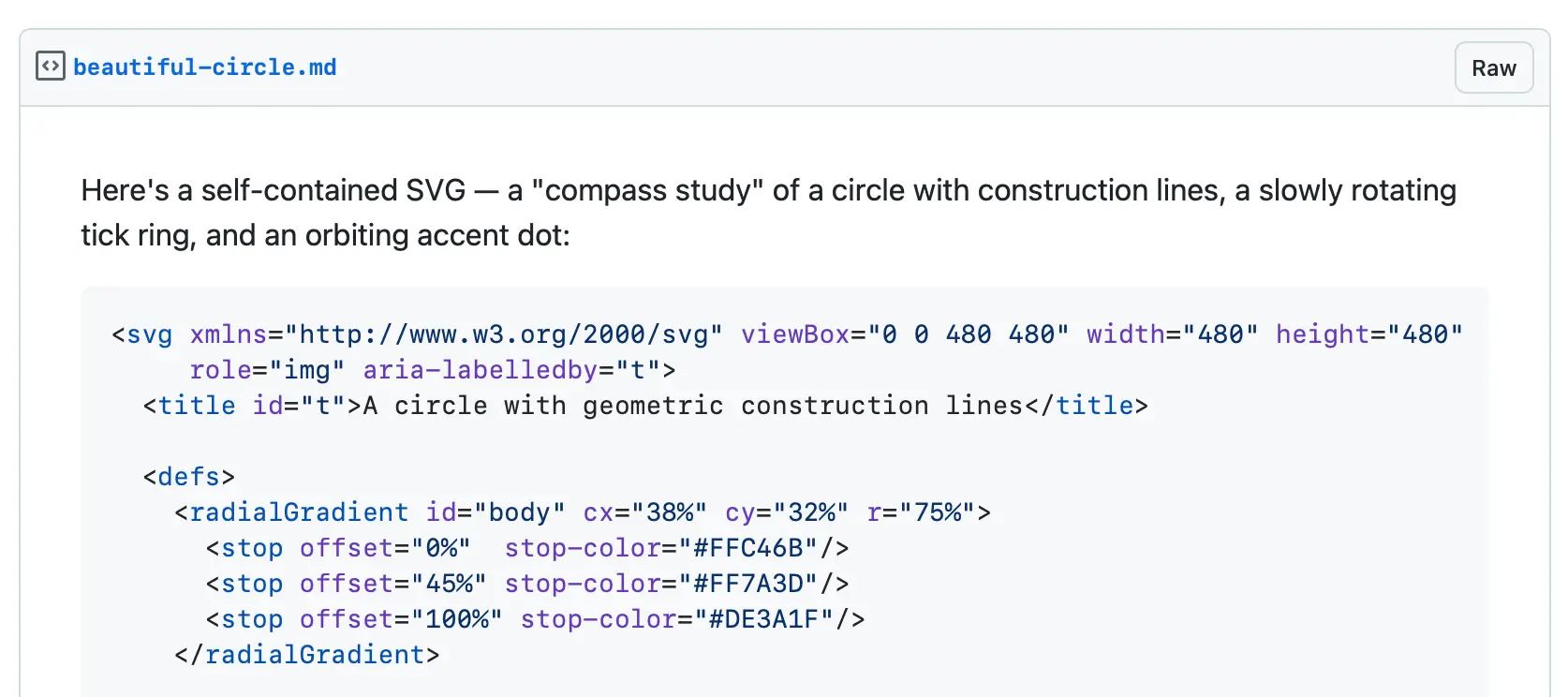
Markdown SVG upgrades — I started building my markdown-svg-renderer tool in May , but I've since added enough features to it that it's worth talking about here again. It's evolved into my ideal tool for sharing Markdown transcripts that include SVG documents. Given my proclivity for drawing pelicans riding bicycles this is a problem that I needed to solve! The tool is very simple. Navigate to markdown-svg-renderer in your browser and paste in some Markdown to see it rendered... or save that Markdown to a CORS-friendly URL or a GitHub Gist and paste in a URL to that document. The URL option will give you a bookmarkable page, for example https://tools.simonwillison.net/markdown-svg-renderer#url=https%3A%2F%2Fgist.github.com%2Fsimonw%2F6f9e48293be5c916652d29f0dc0b0657 - which bakes in the URL to this Gist . If you visit the Gist you'll see raw SVG: In the rendered tool that looks like this instead: As you can see, that SVG block in the Markdown has been transformed into a rendered SVG (in this case animated) plus several tabs. The tabs are the really fun bit. The PNG and JPEG tabs render that SVG to those image formats in the browser and lets you copy or download them - useful for sharing on platforms that don't support SVG directly. The MP4 tab is new today - it examines the SVG to see if it contains any animations, attempts to guess how long the looped video should be, then renders a whole bunch of frames of the animation and loads 30+MB of ffmpeg.wasm so it can compile those frames into an MP4 video using the full power of FFMPEG compiled to WebAssembly and running in the browser. Being able to turn an animated SVG into a MP4 again makes it easy to share on platforms that can't support SVG animation natively. It's a neat trick! Tags: svg , markdown , tools